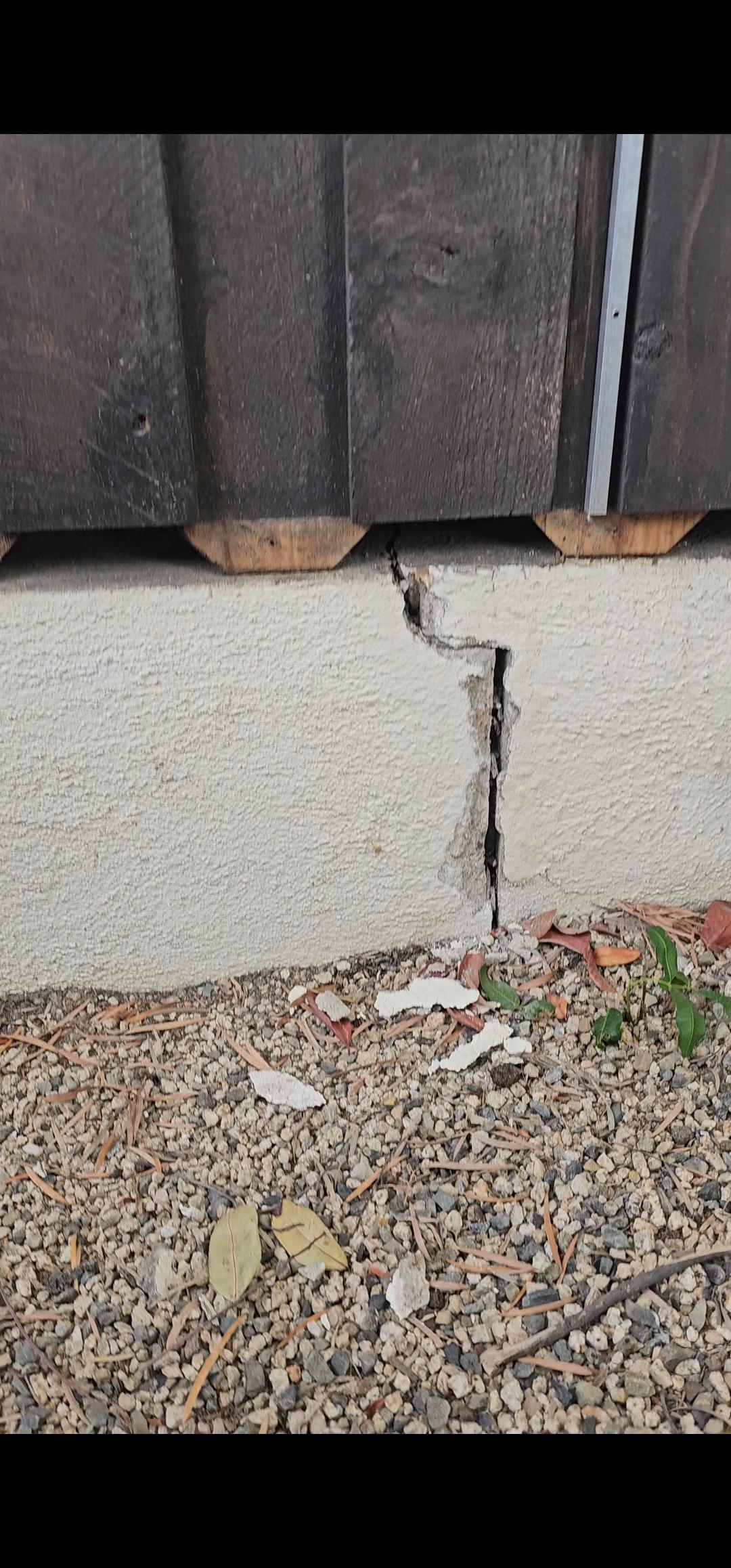
When cracks show up in stucco, most people focus on the surface.
But cracks are often more than just cosmetic. In many cases, they follow specific patterns that can give useful clues about what may be happening underneath the structure.
Cracks can reflect movement in the building, movement in the foundation, or changes in the soil supporting the home. Once you begin to understand those patterns, it becomes easier to tell the difference between normal cosmetic cracking and signs that may deserve a closer look.
One of the most important things to understand is that many building cracks are related to movement below the structure.
As the ground shifts, settles, expands, or contracts, that movement transfers into the foundation and then into the wall system. Stucco, being a rigid cement-based finish, often becomes the surface where that movement shows up first.
Common causes include:
In simple terms:
The ground moves, the structure responds, and the stucco often shows the first visible signs.
Cracks do not always form randomly. Their shape, direction, and location often relate directly to the type of movement affecting the building.
That means crack patterns can help identify:
In other words, a crack can serve as a clue — not just a defect.
When looking at cracks in stucco, there are four main things that help explain what may be happening.
Different soil and foundation conditions create different crack responses.
These may include:
Each one places a different kind of stress on the building.
The direction of the crack matters.
On stucco walls, cracks are often:
The orientation can help show whether the wall is stretching, shifting, or being compressed.
Cracks also reflect how the wall is being loaded.
Typical stress types include:
These different forces often leave different visual clues in the wall.
It is also important to distinguish between:
That distinction can help determine whether the issue is material failure, joint movement, or normal separation at a transition.
Vertical cracks are often associated with settlement-related movement.
They may form when one part of the foundation drops more than another, placing the wall in tension. These cracks are often seen near openings like windows and doors or in mid-wall areas.
In simple terms:
If one area drops, the wall can stretch and split vertically.
Diagonal cracks commonly appear at the corners of windows, doors, and other openings.
These are often signs of uneven movement or differential stress. Corners are natural weak points, so they tend to reveal this type of movement first.
In simple terms:
The building shifts unevenly, and the corners show the stress.
Horizontal cracks may suggest lateral pressure, structural stress, or soil-related forces acting along the wall.
These deserve careful evaluation because they can point to different types of movement than typical vertical cracking.
The location of a crack is just as important as its direction.
Cracks often show up first at:
These are all places where the structure naturally concentrates stress.
In Orange County, homes can be affected by a range of conditions that contribute to stucco cracking, including:
Because of these local factors, understanding crack patterns can be especially helpful when deciding whether a crack is simply cosmetic or something that may point to deeper movement.
Cracks in stucco are not always random, and they are not always just surface flaws.
Their direction, location, and pattern can provide useful information about how a home is moving and where stress may be developing.
That does not mean every crack is a major structural problem. But it does mean that crack patterns can help tell a more complete story about the condition of the building.
If you’re seeing cracks in your stucco and want a better understanding of what they may indicate, a proper evaluation can help determine whether you’re looking at normal movement, localized settling, or something that needs repair.
Premier Plastering provides stucco inspections and repair services throughout Orange County, including Huntington Beach, Newport Beach, Laguna Beach, Costa Mesa, and surrounding areas.
If you have questions about stucco crack patterns, movement, or repair options, reach out to schedule an evaluation.
Understanding the cause is the first step toward making the right repair decision.


 View All our Links on Linktree