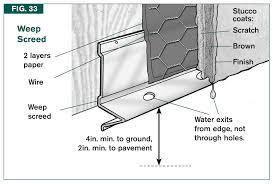
If you own a stucco home in Orange County, the condition of your weep screed plays a bigger role than most homeowners realize.
The weep screed sits at the bottom of your stucco wall and allows incidental moisture to drain out at the foundation line. When it fails, becomes buried, or degrades, the lower portion of your wall system can become vulnerable to long-term moisture damage.
Here’s how you can evaluate the weep screed on your home — and what to look for.
The first thing to inspect is whether the weep screed is visible and unobstructed.
Walk around the perimeter of your home and look at the base of the stucco:
In Orange County, it’s common for hardscape and landscaping to be installed after the home is built. Sometimes this raises the grade higher than intended and blocks the weep screed.
In simple terms:
If the weep screed is buried, it can’t drain properly.
One of the simplest field evaluations is a hands-on check.
Gently push on the weep screed with your hand.
It should feel solid and secure.
If you notice:
those can be signs that the weep screed has degraded.
In coastal Orange County cities like Huntington Beach, Newport Beach, Laguna Beach, and surrounding areas, corrosion is common due to marine air and moisture exposure.
In simple terms:
If the metal feels weak or loose, it may be time to look closer.
In most Orange County stucco homes, the waterproofing substrate behind the stucco consists of building paper — commonly two layers of 60-minute building paper.
The weep screed is the termination point of that system.
If the metal has significantly corroded, it’s worth considering the condition of the moisture barrier behind it. The building paper is the primary layer protecting the wood framing from water intrusion.
When moisture has been present long enough to degrade metal, the integrity of the underlying drainage plane should be evaluated.
In simple terms:
If the visible metal has failed, the hidden moisture barrier behind the stucco may also be compromised.
If water gets past the stucco and behind the building paper (or the paper is torn, degraded, or not lapped correctly), moisture can start affecting materials that were never meant to stay wet.
Common outcomes include:
This is why the base of the wall matters so much — it’s where moisture tends to collect and where early warning signs often show up first.
Beyond the screed itself, inspect the lower portion of the wall for:
These do not automatically mean replacement is required — but they are indicators that further inspection may be needed.
Replacement may be recommended if the weep screed:
Because the weep screed ties into the lath and weather-resistant barrier system, replacement is not simply cosmetic. It involves properly addressing the lower portion of the wall assembly.
Orange County homes are exposed to:
The base of the wall is the most vulnerable location in a stucco system. Regular evaluation of the weep screed can help identify early signs of deterioration before larger issues develop.
Evaluating your weep screed doesn’t require specialized tools.
Look for clearance.
Check the metal integrity.
Watch for rust or cracking.
Pay attention to moisture exposure at the base of the wall.
If anything feels loose, looks heavily corroded, or raises concern, it’s worth having the area professionally inspected.
If you’re unsure about the condition of your weep screed or noticing signs of deterioration at the base of your stucco walls, a professional evaluation can provide clarity before small issues become larger repairs.
Premier Plastering specializes in stucco repair and weep screed replacement throughout Orange County, including Huntington Beach, Newport Beach, Laguna Beach, Costa Mesa, and surrounding communities.
If you would like an inspection or have questions about the condition of your stucco system, contact us to schedule an evaluation.
Early attention at the foundation line can prevent much larger repairs down the road.


 View All our Links on Linktree